
Crawl Space Water Removal in Burien, WA
Fast connection to independent Burien water damage restoration contractors serving 98166, 98146, 98148, and 98168.
Crawl space water removal in Burien, WA pumps out standing groundwater or plumbing leaks beneath pier-and-beam homes, strips waterlogged fiberglass insulation, dries wooden floor joists and subfloors, and restores clean vapor-barrier protection against Puget Sound humidity.
In Burien, thousands of mid-century ramblers and split-level homes sit over vented dirt crawl spaces—especially around Lake Burien, Three Tree Point, and Boulevard Park. Because homeowners rarely open the crawl space hatch, a leaking drain pipe, failed water heater line, or winter groundwater ponding can saturate the under-house soil for weeks before indoor floors start cupping or musty air rises through floor registers. Our Burien water damage restoration referral line connects you with independent local crews equipped for confined-space pumping and subfloor drying.
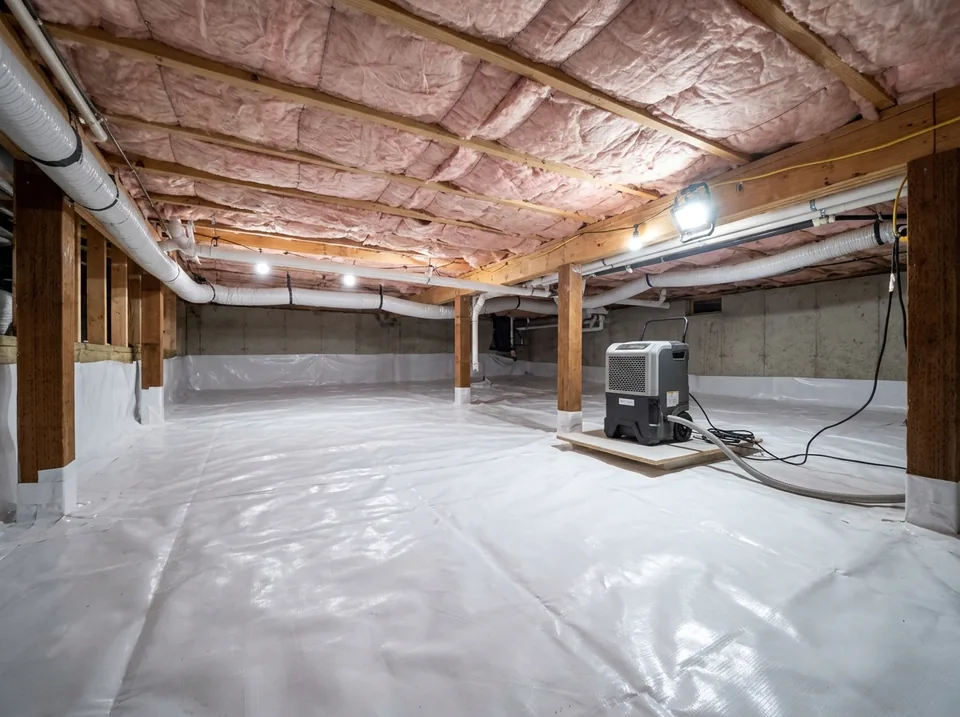
What Crawl Space Water Removal Involves
- Confined-space water pumping: Extracting pooled water from low pockets and sump basins using submersible pumps and long-reach extraction hoses.
- Saturated insulation removal: Pulling down heavy, sagging fiberglass batts that trap moisture directly against Douglas fir floor joists and subfloors.
- Damaged vapor barrier removal: Clearing torn, flooded polyethylene sheeting that traps stagnant water underneath.
- Subfloor & joist structural drying: Ducting commercial dehumidifiers and low-profile air movers under the home via structural drying protocols.
- Antimicrobial treatment & moisture verification: Treating framing as needed and verifying wood moisture content drops below fungal-growth thresholds.
Common Warning Signs & Triggers in Burien Homes
- Cupping, crowning, or squeaking hardwood floors on the main level with no visible interior leak.
- Persistent earthy, damp, or sewage-like odors rising from floor vents or closets.
- High indoor window condensation during Burien's cool, wet autumn and winter months.
- Standing puddles visible through the crawl space access hatch or soggy, fallen belly insulation.
Why Prompt Mitigation Matters
- Protects structural floor joists, rim joists, and plywood subfloors from wood-decay fungi and rot.
- Improves indoor air quality—a significant share of lower-level home air draws upward from the crawl space (stack effect).
- Prepares the crawl space cleanly for a fresh heavy-duty vapor barrier or drainage upgrade.
Step-by-Step Mitigation Process
Inspection & Moisture Check
Technicians enter the crawl space with protective gear, map standing water, and measure joist moisture.
Bulk Pump-Out
Pumps and extraction lines clear standing water and mud or debris from low grades.
Wet Material Teardown
Waterlogged fiberglass batts and ruined plastic sheeting are bagged and removed.
Crawl Space Dry-Out
Commercial dehumidifiers and axial fans dry framing until wood moisture hits safe targets.
Cost Factors in Burien, WA
Crawl space water removal costs vary with clearance height (tight 18-inch bellies take longer than 4-foot crawl spaces), water source (clean pipe leak vs. groundwater or sewage line break), square footage of wet insulation to remove, and drying duration. Read our Crawl Space vs. Basement Flooding Guide for more detail.
When to Call Immediately
Call promptly whenever you spot standing water under the house, hear running water beneath the floor, or notice sudden flooring cupping after a heavy rainstorm or a plumbing leak.
Frequently Asked Questions
Rarely during Burien's October-to-March rainy season. Cool outdoor temperatures and high ambient Puget Sound humidity keep crawl space air near saturation, allowing trapped moisture to wick into joists and cause mold or wood rot.
In most cases, yes. Once fiberglass insulation becomes waterlogged, it loses thermal R-value, sags away from the subfloor, and holds moisture tightly against wooden joists.
Crews use compact low-profile air movers and either place a compact dehumidifier inside the crawl space or duct dry air from a commercial LGR dehumidifier positioned near the access hatch.